
Falling Behind in Urban New Jersey: A Report on Key Indicators in 12 Cities
KATHARINE L. NELSON
DAVID D. TROUTT
March 2026
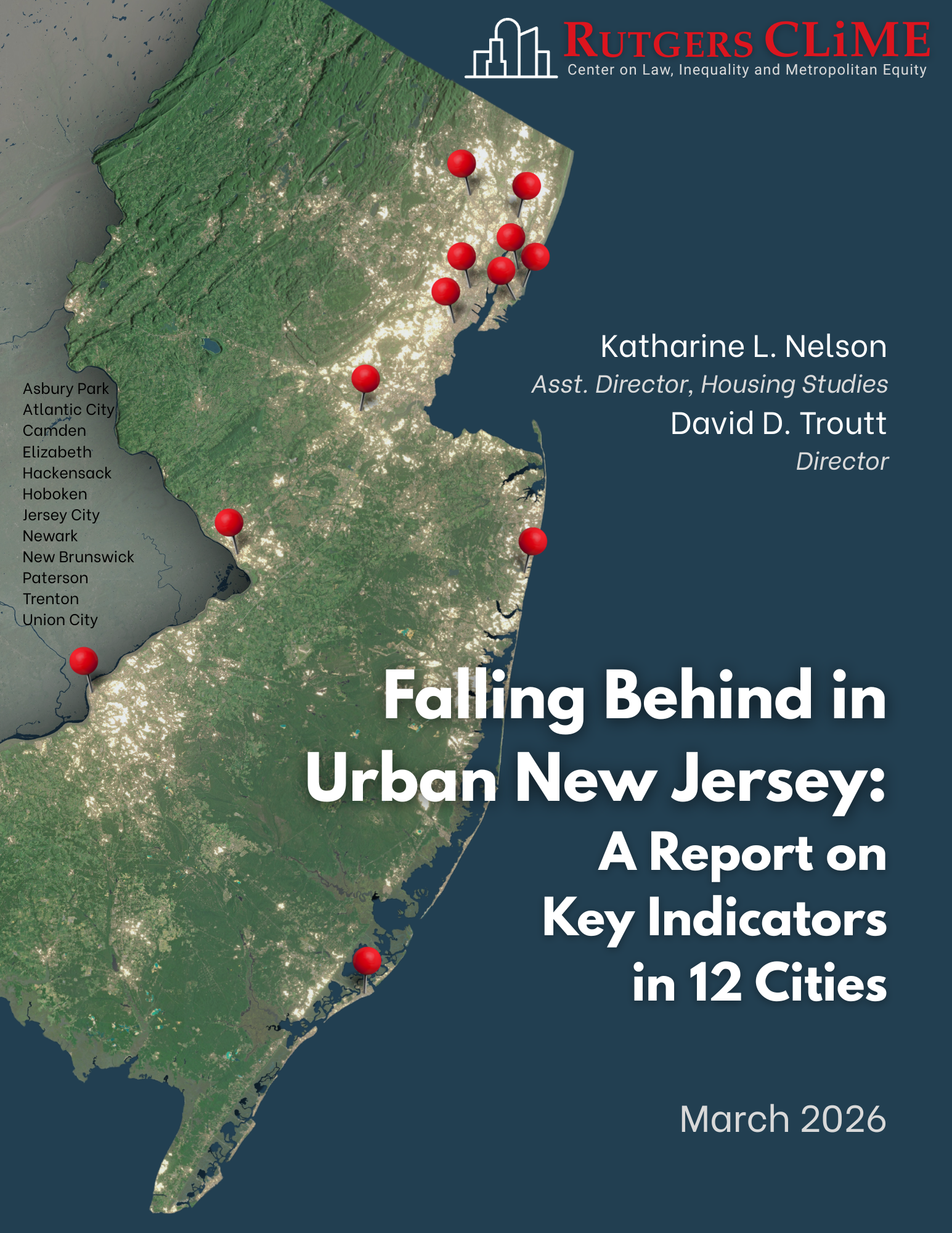
CLiME’s inaugural evaluation of 12 of New Jersey’s most populous cities reveals striking trends that reverse many of the last century’s assumptions about life in the Garden State. Despite dynamic changes in urban-suburban demographics, housing and job growth, one overriding fact prevails: economic inequality has hardened between cities and suburbs and within and across cities. We looked at social and economic trends in the state’s 12 most populous cities – Newark, Jersey City, Paterson, Hoboken, Union City, Hackensack, Asbury Park, New Brunswick, Trenton, Camden and Atlantic City – and found:
Urban population growth and residential development now outpaces the rest of the state.
The 12 cities are home to many working-class and immigrant residents, and more than half households struggle to make ends meet.
The 12 cities are home to the state’s poorest children, with poverty rates as high as 48 percent.
A lack of affordable housing is a problem statewide, but it’s especially pronounced in the gentrifying cities of the NY metro.
Read more below to learn how these factors play out differently in different parts of the state and our recommendations for enhancing the economic prospects of New Jersey residents.
Read the 12 Cities Report below:
Falling Behind in Urban New Jersey: A Report on Key Indicators in 12 Cities